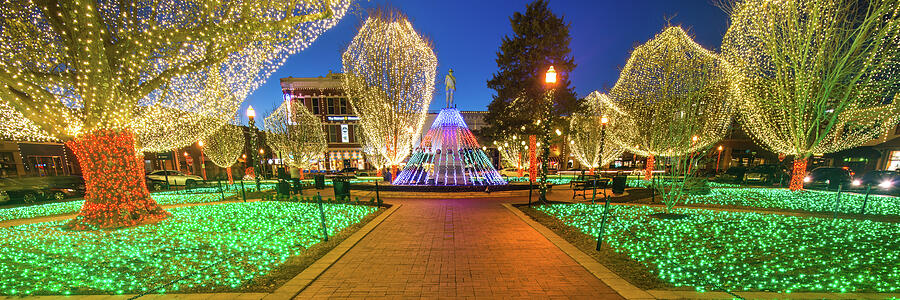
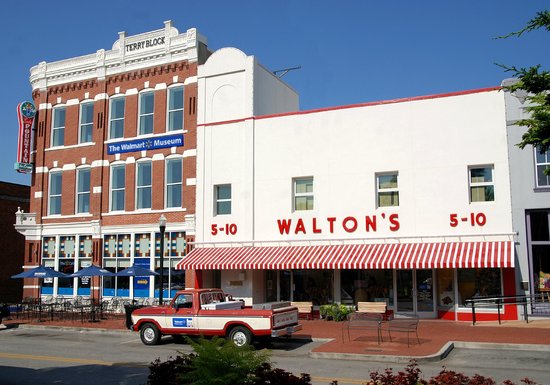
One of my favorite places to take friends to in downtown Bentonville is the 21c hotel and museum located just off the square. It is easy to spot with green penguin sculptures at the doors and on the roof, a car covered in coins permanently parked out front, and because of the basketball sculpture in the courtyard. This sculpture is something that reminds me of Leonardo da Vinci and the Renaissance because of the way it represents a tree. During class we looked at many representations of trees and how they developed from looking like flat, cookie cutter copies distributed across a painting in the Medieval times to da Vinci’s versions which were each unique and appeared to be in the process of growing in the painting. Then, after the Renaissance postmodern trees arrived, some only being a series of lines and color that seemingly left the shape to the imagination. Orange Tree, the sculpture created by Alexandre Arrechea is another example of a postmodern tree with a greater meaning.
The piece has been exhibited in New York, Philadelphia and Shanghai, as well as being used in a Pepsi-Cola campaign. It was designed to explore the interaction between urban street culture and sports, but the way the tree was designed lends itself to drawing Renaissance inspirations as well. Arrechea’s tree is clearly not symmetrical and follows the idea da Vinci used that branches do not extend directly out, but go slightly upward, bent, and more sparsely distributed at the bottom compared to the top. However, the sculpture also draws from postmodern art by not being scientifically realistic. It does not draw from da Vinci’s rule of trees, the idea that if you were to fold the branches of a tree up, it would look like one long trunk of equal width. The trunk of the Orange Tree is a straight pole of equal diameter throughout, making it impossible for the rule of trees to be applied here.

This contradiction created by using aspects of a realistic tree and unrealistic tree is something that makes this piece postmodern. As described by Linda Hutcheon, “postmodernism is a contradictory phenomenon, one that uses and abuses, installs and then subverts, the very concepts it challenges—be it in architecture, literature, painting, sculpture, film, video, dance, TV, music, philosophy, aesthetic theory, psychoanalysis, linguistics, or historiography,” (Hutcheon 3). Not only does Arrechea’s sculpture use and abuse the Renaissance idea of a tree, but its concept is contradictory as well. It shows how the urban street culture has a close relationship with sports. In the urban environment the basketball hoop being the tree that is widely distributed, representing a natural part of culture.
The basketballs below the tree could either be representative of fallen leaves, if one thinks of the sculpture as a traditional tree. Or, the basketballs could be thought of as representations of all the players who use the tree and its various hoops. In this form, the amount would be signifying the presence of a community built around the tree, brought together by the nature of their urban environment. It shows the amount of people and the amount of time they spend around a basketball hoop, showing the true significance of sports in street culture. It is more than a recreational activity, but a way that the community can bond and grow stronger, as represented by the growing tree with many hoops. The way the sculpture instills the concept of the strong bond between urban street culture and sports in the viewer’s head and then juxtaposes that with the natural elements of the tree-like structure creates the exact contradiction spoken of by Hutcheon as the epitome of postmodernism.
Finally, the piece exemplifies postmodernism and a change in paradigm by having multiple perspectives to look at the sculpture from. Da Vinci spent a lot of his time trying to establish perspective in his art, giving the viewer a specific point to stand from where they viewed the piece like he would want them too. Even sculptures at the time showed people in such a way that the viewer knew where to stand to look at the self-designated “front” of the sculpture. There was a focal point where one’s eyes would be drawn to in Renaissance art. This was largely due to the creation of the plane and vanishing point creating realistic dimensions and perspectives for distant objects. For the first time, a hazy, small background was used to draw the eyes to the foreground. That vanishing point used both back in the Renaissance and still some today establishes the correct way to view the art. Arrechea’s Orange Tree does not do this, or have a correct viewpoint, unlike Renaissance art. This is an example of the paradigm change that has since occurred, focusing less on the correct perspective but multiple different perspectives and interpretations like postmodernism does. The sculpture can be viewed from 360 degrees with the appearance of the piece changing each time the angle does because that is how it was designed. Alexandre Arrechea created a great example of the shift in paradigm since the Renaissance by drawing from some of da Vinci’s techniques and omitting others to create the postmodern sculpture Orange Tree.
Source
Hutcheon, Linda. A Poetics of Postmodernism: History, Theory, Fiction. Routledge, 2010.




 Italy: Imagined & Realized